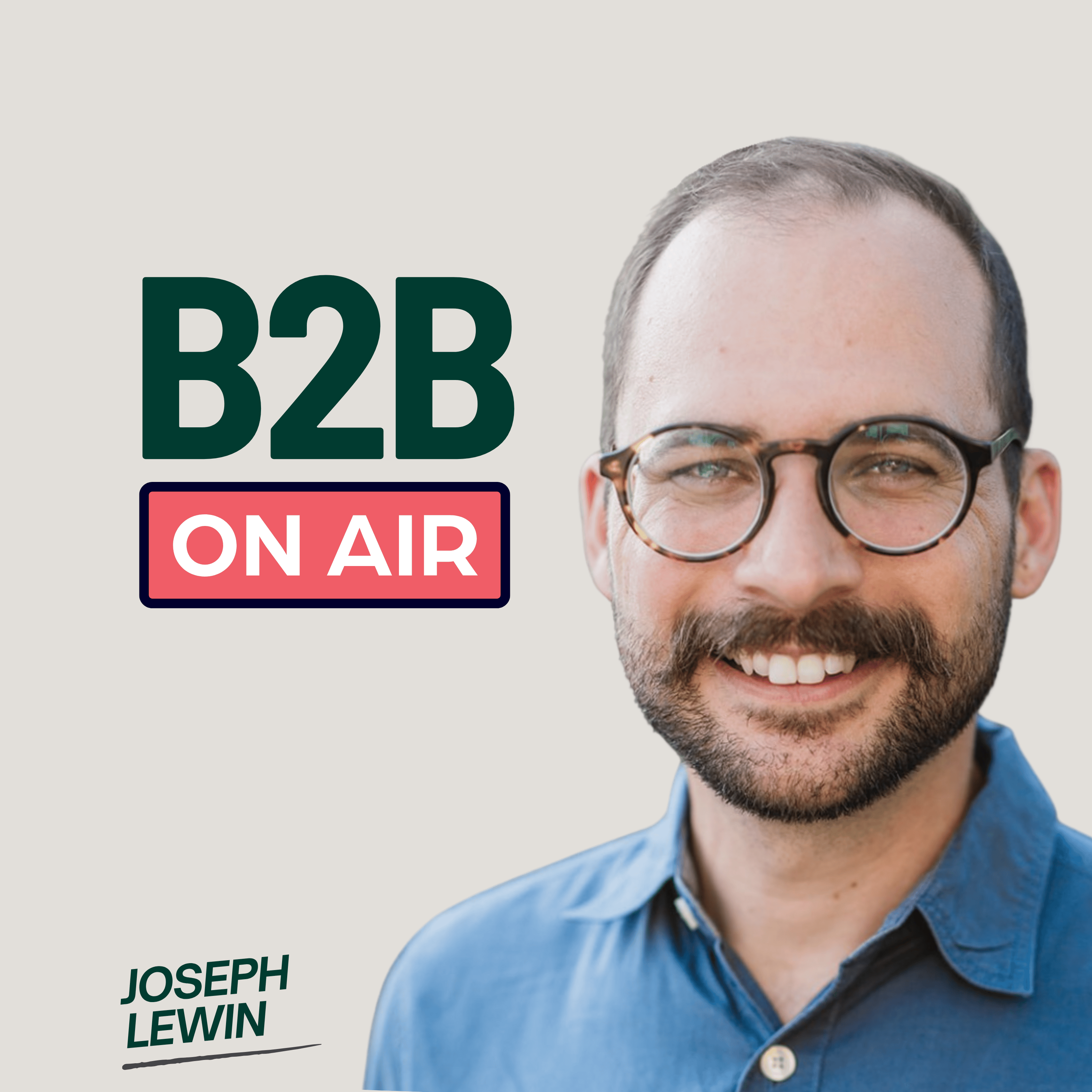
How Does Podcasting for B2B Networking Actually Work for Introverts?
Published May 21, 2026
Most introverts already know how to build great relationships. The problem is the room.
Podcasting solves the room. Instead of walking into a crowded event where nobody knows your name, you build the relationship first, one conversation at a time, on your terms. By the time you show up in person, you are not a stranger. You are a friend. Joseph Lewin used this exact approach to go from awkward event-goer to landing a job through a chain of podcast guests, starting with a single interview at Ramsey Solutions.
What should introverted B2B professionals know about podcasting for networking?
Podcasting for B2B networking works because it converts cold outreach into a structured, one-on-one conversation where you control the environment. Here are the core principles that make it work:
- Map your target network before you book a single guest: Identify the specific communities and circles you need to be part of. If you can name five people in a group, you have enough to start building a guest list that opens that entire network.
- Interview multiple people within the same circle: Joseph interviewed Casey Maxwell and Trey Schinneman, both from the Ramsey Solutions marketing team, to build depth inside one community. One contact becomes a cluster.
- Treat the interview as the beginning, not the transaction: The goal after recording is not to close a deal. It is to be seen as someone worth knowing, someone worth pulling into the community.
- Let guests make the introductions for you: After interviewing Bob Burg, author of "The Go-Giver," Burg immediately said "you have to meet my marketing lady Kim." That introduction became a client relationship and an invitation to an exclusive in-person event.
- Use in-person events as the payoff, not the starting point: When you already know people at an event, they pull you into conversations and introduce you around. The hard part is already done.
- One relationship compounds into many: A single interview with Casey Maxwell eventually led to an introduction to Mason Cosby, who hired Joseph to run the podcast division of his agency.
Why do introverts struggle with traditional B2B networking events?
Traditional networking events are structurally hostile to introverts. The energy is diffuse, the groups are already formed, and there is no clear role for someone entering cold.
Joseph describes it directly from experience. At the Ocean event in Cincinnati, he found himself walking around without knowing where to fit in. The conversations were happening inside existing groups of friends, not between strangers. Inserting himself into those groups felt awkward because, as he puts it, "nobody knew who I was, and so I was just this awkward person stepping into the middle of a group of friends who were already having conversations."
The problem is not the introvert. The problem is the format. Large networking events reward people who already have social momentum inside the room. If you do not have that, you are starting from zero every time.
One-on-one conversations are where introverts generate energy, not drain it. The issue is that traditional B2B networking rarely offers that format. It drops you into a crowd and expects you to perform.
How does podcasting create warm relationships before in-person events?
Podcasting works as a networking tool because it manufactures the exact conditions introverts need: a defined role, a clear purpose, and a one-on-one conversation with a specific person.
When you invite someone onto your show, you are not cold-calling them or hoping to get five minutes at a conference. You are offering them something valuable: a platform, an audience, and a genuine conversation about their work. That dynamic shifts the entire relationship from the start.
"What's been amazing about podcasting is that it's let me build relationships in new networks." Joseph Lewin
By the time you attend an event where that person is present, you have already had a real conversation. You have listened to them, asked thoughtful questions, and given them value. They remember you. More importantly, they are glad to see you. That is the difference between walking into a room alone and walking into a room where someone immediately waves you over and starts making introductions.
This is not a slow process either. Joseph built meaningful pipeline inside the Ramsey Solutions community, the Go-Giver community, and several others simultaneously, each one seeded by a single targeted interview.
What is the Go-Giver approach to B2B relationship building through content?
The Go-Giver philosophy, popularized by Bob Burg's bestselling book of the same name, is built on a simple premise: lead with value, and the relationships will follow. It is the opposite of the transactional networking model that most B2B professionals default to.
Joseph applied this directly. He interviewed Bob Burg not to pitch him, but to give him a platform and have a genuine conversation. The result was not a sales close. It was an unsolicited introduction from Burg to Kim Angeli, who became both a client and a close friend. Kim then invited Joseph to a small, exclusive in-person event inside the Go-Giver community, which opened an entirely new network of potential clients and collaborators.
"The goal is not to try to close those people when you're done recording. It's to build a relationship with them." Joseph Lewin
The math here is worth noting. One interview with one author produced a client, a friend, an event invitation, and access to an entire community. That is the compounding return on a relationship-first approach to B2B content. No cold outreach. No friction. Just a conversation that led to trust, which led to doors opening.
FAQ
Can introverts actually build a strong B2B network without going to a lot of events?
Yes, and podcasting is the most direct way to do it. By building one-on-one relationships with key people in your target communities before you ever attend an event, you arrive with existing connections rather than starting from zero. Joseph Lewin built relationships across multiple professional communities, including the Ramsey Solutions team and the Go-Giver community, primarily through podcast interviews before meeting anyone in person.
How do you choose who to invite as a podcast guest for networking purposes?
Start by mapping the specific communities and career circles you want to be part of. Identify people who are already connected within those groups, not just high-profile names, but people who know other people. The goal is to interview multiple people within the same network so that each guest can introduce you to the next, creating a compounding chain of warm relationships.
Is podcasting for B2B networking only useful for introverts?
No, but it is especially powerful for introverts because it replaces the format that drains them (large group cold networking) with one that energizes them (structured one-on-one conversation). Extroverts can use the same strategy, but they often have more tools available to them in traditional networking settings. For introverts, podcasting is not a workaround. It is a genuine competitive advantage.
How long does it take to see real business results from podcast-based networking?
The timeline varies, but the compounding effect is real. Joseph’s interview with Casey Maxwell from Ramsey Solutions eventually led, through a chain of introductions, to a job offer from Mason Cosby several years later. The Go-Giver community produced both paying clients and vendors within a shorter window. The key is consistency and intentionality: map the network, book the guests, and treat every conversation as the start of a long-term relationship.
Podcasting for B2B networking is not a content strategy. It is a relationship strategy with a microphone. For introverts, it solves the hardest part of building a professional network: getting into the room with credibility already established. Map the communities you need. Interview the people inside them. Show up to events as a friend, not a stranger. The pipeline follows the trust, and the trust follows the conversation.
If you want to go deeper on the Go-Giver philosophy that shaped Joseph's approach to relationship-first networking, Bob Burg's book is the place to start.
About the host
Joseph Lewin
Host of B2B On Air · The Podcast Launch Guy | 45 B2B Podcasts Launched | Hosts I’ve worked with have closed over $17M in revenue | 100 Million Views On My Personal Social Video
Transcript
Read the full transcript
Joseph Lewin [0:00]
If you’re an introvert and you’re in B2B marketing or sales, this episode is for you. Welcome to B2B On Air. I’m your host, Joseph Lewin, and in today’s episode, we’re gonna talk about the secret that helps introverts in B2B marketing and B2B sales connect with a larger community and start building the relationships you need to grow your career, and close bigger deals. When it comes to one-on-one conversations, that’s where I thrive. I love talking to people one-on-one. That’s where people might even think of me as being extroverted, because once I build rapport and I’m having a good conversation with somebody, I can get going, I can be excited. And I do actually get in a lot of energy from one-on-one conversations. But when it comes to breaking into new groups, or getting outside of my existing network, that’s traditionally been very difficult for me to
do. I’m just thinking back to when I was first getting into marketing and I started a business. I was really struggling to figure out how do I connect with new people. And so I did what most people do in that case, and I started going to in-person events. I went to some BNI groups, I went to a couple of local events around growth. I went to an event, one in particular I’m thinking of, the Ocean event, uh, here in Cincinnati. And I can distinctly remember kind of walking around, uh, not sure what to do with myself because once I get into a larger group of people or there’s a lot of people that I don’t know, I can’t really figure out what my role is or where I fit. And so I’ve always had a hard time going and starting conversations with brand new people.
I can distinctly remember at this event, I was walking around awkwardly, I’m sure, and I saw these groups of people who were talking to each other, and that’s where most of the conversations were happening. There weren’t a lot of people standing around one-on-one, and so it was difficult for me to go start a conversation. And so I go and I just try to insert myself into a group of friends that are already there, they’re already talking to each other, And it sort of worked, but nobody knew who I was, and so I was just this awkward person stepping into the middle of a group of friends who were already having conversations. And I experienced that over and over again with different events that I went to. As I’ve grown and I’ve gone to more events, I have gotten a lot better at jumping in and
starting conversations with people, but it’s not really my natural bent. And to this day, I’m still not the best at going to an event where I know nobody and actually getting the value that I want. But that’s where the secret comes in. This is a show about podcasting, and so that’s how— what I’m gonna be talking about is a secret. But what’s been amazing about podcasting is that it’s let me build relationships in new networks. And so then when I’m going to an in-person event, I already know multiple people there, and I’ve probably interviewed at least one, if not multiple people, at every event that I go to. And that’s not on accident. It’s because it’s so much easier when you go to an event when you know somebody and they start making introductions for you, or they’re one of the people in this group
of friends and you’re able to go join in and they pull you into the conversation and start introducing you to other people. If you’re an introvert, what you can do is figure out who do you need to know and what groups of people are out there that all know each other that if you were part of that community, you’d be able to move forward in your career faster and end up getting the relationships that lead to bigger, better deals. If you can start listing out who some of those key people are and what groups you wanna get into, those are great targets for people to have on your show as guests. The goal is not to try to close those people when you’re done recording, It’s to build a relationship with them. It’s to add value to where they see you as somebody who’s worth
knowing, as somebody who would be worth pulling into their community. Now, I’ve had this happen several times. Let me give you an example. A few years ago, I was trying to figure out what I wanted to do with my marketing career, and I considered going to work at Ramsey Solutions, Dave Ramsey’s company. My wife and I have paid off a ton of debt and been able to do a lot of really amazing things because we’ve gotten our finances in order, and in large part, that was due to Dave Ramsey’s teachings. So I considered going to work for his company. And what I did was I ended up going and interviewing Casey Maxwell, who at the time was on his marketing leadership team. And then through Casey Maxwell, I ended up getting introduced to Trey Schinneman, who at the time was also a marketer on Dave
Ramsey’s team. And through the two of them, I’ve gotten to meet a lot of other amazing people who used to work at Ramsey Solutions, including Eva Daniel, who’s an amazing speech coach, and she’s done a lot of speech writing. She is absolutely amazing. So I’ve interviewed her on a podcast before, uh, and then I ended up going to Nashville and meeting a bunch of these people in person, and they’re really amazing. But fast forward a few years, and Trey Schinneman ends up introducing me to my now boss, Mason Cosby, who ended up hiring me to come on and run the podcast division of his agency. And so through this original relationship with Casey Maxwell, I ended up being introduced to a lot of people who have added significant value to my life. I’ve ended up doing work with several people in that community, and I’ve
had some of them as clients. I’ve paid some of them. I’ve worked with Eva Daniel on the, the speaking side of things before. But then it was through that new group of people that I met Mason Cosby, who I now work for. So that’s one group of people who I built relationships with. Another example is that I interviewed Bob Burg on a podcast. He is the best-selling author of the book The Go-Giver. It’s an absolutely amazing book, highly recommend checking it out. Bob is an absolutely awesome dude. So I had Bob on my show, and after the interview was done, he said, man, you have to meet my marketing lady Kim. You’re gonna love her. So he makes an introduction to Kim Angeli, who ended up becoming a client of mine and a really dear friend. And then Kim ended up inviting me to go
to a small in-person event that Bob Burg was putting on, and I met a bunch of other people in the Go-Giver community. I’ve ended up working with several folks from that community, both as clients, and I have also ended up paying money to some folks in that space as well. And there’s several other communities that I’ve been able to get pulled into and to build great relationships from as an introverted person. So if you’re like me and you struggle to insert yourself into new friend groups and new communities, try starting a podcast. Map out the people who you want to know and the different networks that they’re a part of, and don’t just focus on interviewing or talking to one person within a group of friends. Interview a bunch of people in these different networks. They’ll end up introducing you to other people and making
the intros to have them as guests on your show, and then you build these great friendships and communities within multiple different circles. And that way, you end up getting invited to speak or be on podcasts within that community. When you go to an in-person event, you get pulled into the conversations. Now, going to in-person events is so much more fun because I’m just going to meet a bunch of friends and get introduced to lots of new awesome people through these new groups of friends that I’ve made. So if you’re an introvert like me and you’re struggling to break into new networks, Start a podcast, start interviewing people. It won’t steer you wrong. And with that, thanks so much for tuning into this episode, and we’ll see you on the next one.